PTFE envelope gaskets have emerged as the go-to solution for corrosive media, high-temperature environments, and sanitary applications where standard rubber gaskets fail. Yet not all manufacturers produce them to equivalent standards. Certification portfolios, core insert options, and engineering support capabilities vary dramatically—and the wrong choice exposes your operation to avoidable risk.
This guide identifies the top PTFE envelope gasket manufacturers and the criteria that separate industry leaders from commodity suppliers.
Key Takeaways
- PTFE envelope gaskets pair a chemically inert PTFE shell with a resilient core, suitable for aggressive media and regulated environments
- Widely adopted in pharma, food processing, chemical, and petroleum sectors; rated for -195°C to +260°C
- Key selection criteria: certifications (ISO 9001, FDA 21CFR, 3A, USDA), core material options, and custom sizing
- Top manufacturers cover distinct niches — Artesian Systems (sanitary/custom), Garlock (heavy industry), Klinger (global), Teadit (fluoropolymer)
- Match certifications and product range to your process before committing to a supplier
What Are PTFE Envelope Gaskets?
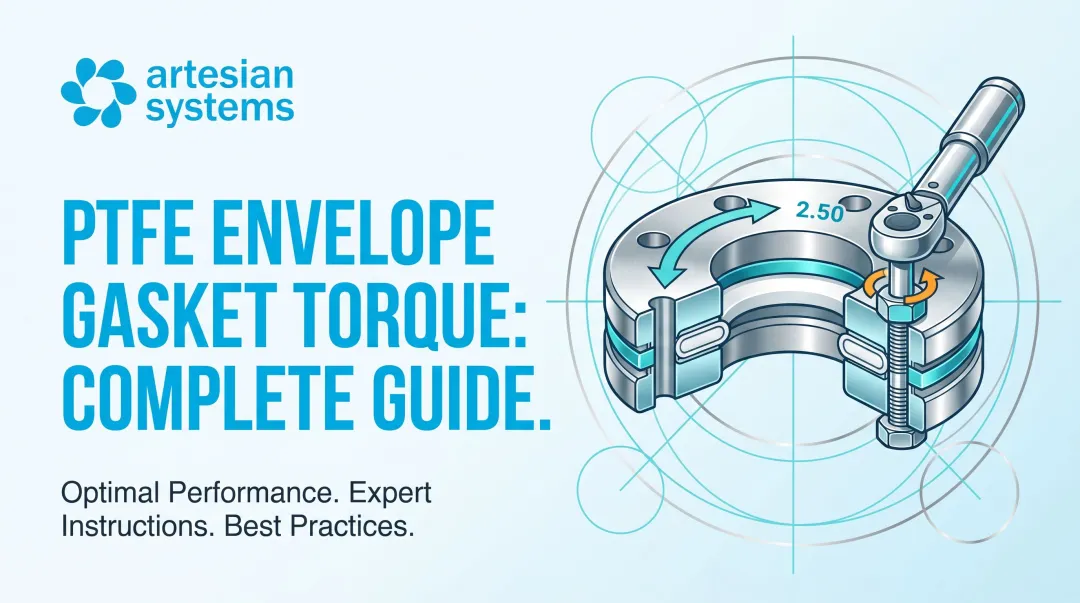
A PTFE envelope gasket consists of a PTFE outer shell (the "envelope") that fully encases a softer core insert material. This differs from solid PTFE gaskets, which are prone to creep and cold flow under bolt load. It also differs from expanded PTFE (ePTFE) gaskets, which use a porous, compressible structure without a distinct core.
The core insert is the frequently misunderstood variable in gasket selection. Common core materials include:
- EPDM (-51°C to 149°C): Broad water and steam resistance; limited hydrocarbon compatibility
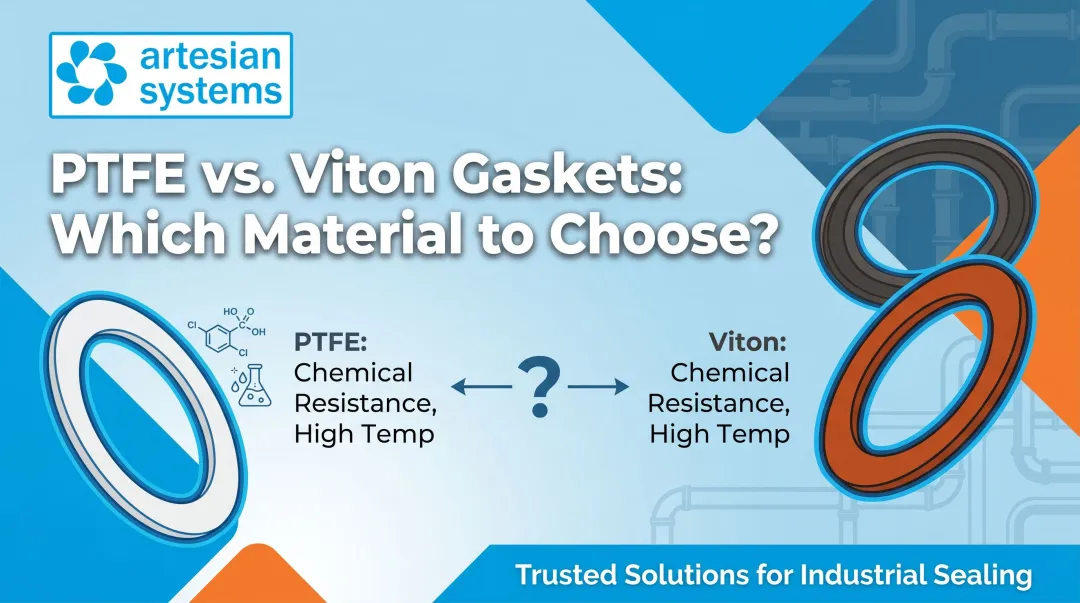
- Viton/FKM (-15°C to 199°C): Strong resistance to petroleum derivatives, alcohols, and acids
- Silicone (-59°C to 232°C): Widest temperature range; preferred for food-contact use, though lower mechanical strength
- Buna-N/Nitrile (-30°C to 100°C): Reliable for oils and fuels within a moderate temperature window
- Aramid Fiber: High mechanical strength and dimensional stability; suited for corrugated metal cores in high-pressure service
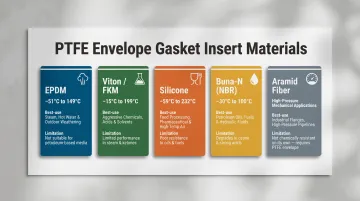
Core selection determines compressibility, resilience, and true service limits. The PTFE shell handles chemical inertness, but the core material must independently withstand the temperature and media exposure — which is what drives application-specific selection.
Primary Use Cases
PTFE envelope gaskets are specified for:
- Glass-lined and enamel-coated flanges where surface damage must be avoided
- Cast iron and non-standard flanges unsuitable for spiral wound or metal-reinforced gaskets
- Sanitary and hygienic applications requiring FDA, USDA, or 3A compliance
- Industries: Pharmaceutical, food & beverage, chemical processing, petroleum refining, water treatment
Top PTFE Envelope Gasket Manufacturers
These manufacturers were selected based on industry reputation, certification portfolio, product range, customization capability, and engineering support. Price alone should never drive the decision, because compliance gaps and premature failures cost far more than initial savings.
Artesian Systems
Artesian Systems is a U.S.-based provider of sanitary process components for food, pharmaceutical, chemical, and petroleum industries, backed by nearly two decades of mechanical engineering expertise. The company holds ISO 9001 certification and manufactures gaskets compliant with FDA 21CFR177.2600/1550, USDA, and 3A approved materials—making them a strong choice for regulated, sanitary-grade applications.
Key Differentiators:
- Custom component design with CNC machining for specialty alloys and composites, backed by rigorous testing protocols
- Inline filtration, CIP systems, and full process pipe engineering including P&IDs and automation
- Proven in mission-critical applications: microplastics detection in drinking water and THC removal from hemp oil without product degradation
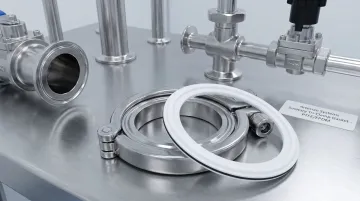
- Tri-clamp envelope gaskets (1.5"–12") and unitized gaskets with PTFE shell × EPDM core; internal un-flanged design reduces ferrule misalignment risk
| Key Certifications / Standards | ISO 9001, FDA 21CFR177.2600 & 1550, USDA Compliant, 3A Approved Materials |
|---|---|
| Industries Served | Food & Beverage, Pharmaceutical/Bio-Pharma, Chemical, Petroleum, Nutraceutical, Hemp/Cannabis Extraction, Medical Device |
| Specialization | Sanitary-grade components, custom system design, inline filtration, CNC-machined specialty materials |
Garlock Sealing Technologies
Founded in 1887 in Palmyra, New York, Garlock is one of the longest-established U.S. sealing manufacturers, now a subsidiary of Enpro Industries (NYSE: NPO). With 1,887 employees across 14 facilities in 12 countries, Garlock serves heavy industry, chemical processing, hydrocarbon, power generation, and pharmaceutical sectors.
Key Differentiators:
- GYLON 3565 ENVELON™ is Garlock's proprietary PTFE envelope replacement, rated -268°C to +260°C and up to 83 bar (1,200 psig)
- Multiple GYLON styles meet FDA 21CFR177.1550; Styles 3500, 3504, 3510, and 3522 carry USP Class VI certification
- Style 3522 is 3A-approved; Styles 3760-U and 3505 hold NSF 61 certification for potable water contact
- Patented microcellular PTFE construction reduces creep and cold flow compared to traditional envelope gaskets
| Key Certifications / Standards | ISO 9001:2000, NUPIC audited, FDA 21CFR177.1550, USP Class VI, 3A, NSF 61 |
|---|---|
| Temperature / Pressure Range | -268°C to +260°C; up to 83 bar (1,200 psig) depending on style |
| Core Insert Options | Rigid PTFE core (Style 3545), EPDM core (STRESS SAVER 370), microcellular PTFE cores |
Klinger Group
Founded in 1886 in Vienna by Richard Klinger, the Klinger Group is one of the most recognized names in industrial sealing globally. Headquartered in Gumpoldskirchen, Austria, Klinger operates manufacturing and distribution facilities across Europe, Asia (Thailand, China), Russia, the Americas, and Africa.
Key Differentiators:
- Broad PTFE envelope profile range: PF2, PF3, PF18, PF21 (flat insert); PW4, PW5, PW21, PW1A-3 (corrugated metal core)
- Core materials span graphite laminate (-195°C to +250°C), fiber insert (-100°C to +150°C), and corrugated stainless steel 1.4571 for high-pressure use
- TA-Luft and EN 13555 compliant, engineered specifically for European regulatory and emission control requirements
- Regional manufacturing across multiple continents enables rapid custom sizing and shorter lead times
| Key Certifications / Standards | ISO 9001, TA-Luft, EN 13555, EN 1514-3, BS 7076-3 |
|---|---|
| Product Range | Sizes 1/2" to 24"+ NPS; flat, corrugated, and solid metal core options; full ANSI/DIN/JIS flange compatibility |
| Primary Industries | Chemical processing, glass-lined/enameled equipment, pharmaceutical, food & beverage, water treatment |
Teadit
Founded in 1958 in Rio de Janeiro, Brazil, Teadit has grown into a global sealing manufacturer with facilities across multiple continents, serving 50+ countries. The company holds 20+ patents and focuses heavily on fluoropolymer sealing products.
Key Differentiators:
- NA-1100 compressed fiber core is the standard insert for Teadit PTFE envelope gaskets, rated to 270°C continuous (450°C intermittent) and 70 bar continuous (130 bar max)
- Facilities in South America, North America, and Europe support regional customization and shorter lead times
- Product range covers PTFE envelope gaskets, expanded PTFE sheets, structured PTFE, and specialized types for petrochemical and pharmaceutical service
- 60+ years of fluoropolymer expertise supports custom formulations and application-specific engineering solutions
| Key Certifications / Standards | ISO 9001, FDA 21CFR177.1550 (for select materials), ASME B16.21, ASTM F36/F112 |
|---|---|
| Customization Capability | Custom sizing (up to 3000mm OD), multiple core insert materials (fiber, graphite, elastomer), non-standard configurations available |
| Applications / Industries | Petrochemical, chemical processing, pharmaceutical, food & beverage, water treatment, power generation |
W.L. Gore & Associates (Gore)
W.L. Gore & Associates invented expanded PTFE (ePTFE) and produces fluoropolymer sealing products used across chemical processing, pharmaceutical, and high-purity applications. Gore does not manufacture traditional envelope gaskets; instead, they offer proprietary ePTFE alternatives designed for the same flange types.
Key Differentiators:
- GR Sheet Gasketing is 100% ePTFE (not an envelope gasket), offering chemical resistance and conformability without a core insert
- Universal Pipe Gasket Style 800 uses ePTFE with a non-permeable barrier layer for steel, glass-lined, and FRP flanges; rated -60°C to 230°C typical, -269°C to 315°C max
- Pressure range spans full vacuum to 40 bar typical, up to 210 bar max depending on application
- Compliance portfolio includes TA-Luft, FDA 21CFR174.5/177.1550/175.300, EU 1935/2004, BAM oxygen service, ABS marine, and ISO 9001
| Key Certifications / Standards | ISO 9001, TA-Luft, FDA 21CFR174.5/177.1550/175.300, EU 1935/2004, BAM oxygen, ABS marine |
|---|---|
| Technology Differentiator | Proprietary ePTFE microstructure replaces traditional envelope gasket construction; eliminates core material compatibility concerns |
| Typical Use Cases | Glass-lined reactors, FRP tanks, pharmaceutical equipment, chemical processing flanges, high-purity applications |
What to Look for in a PTFE Envelope Gasket Manufacturer
The most common procurement mistake is selecting a manufacturer based primarily on price or brand recognition, without verifying that the product meets your industry's compliance requirements. A $15 gasket that fails FDA inspection can trigger a $100,000+ remediation event and production downtime.
Certifications and Regulatory Compliance
Not all certifications are interchangeable. Match certifications to your industry's regulatory framework:
- 3A Sanitary Standards / USDA: Required for dairy, food processing, and beverage production where sanitary design is mandated
- FDA 21CFR177.2600: Covers rubber and elastomeric materials for repeated food contact; applies to core inserts
- FDA 21CFR177.1550: Covers perfluorocarbon resins (PTFE) for food contact; applies to the envelope shell
- ISO 9001: Baseline quality management system indicator; does not guarantee product compliance but reflects consistent manufacturing processes
- USP Class VI: Biocompatibility testing for pharmaceutical and medical device applications
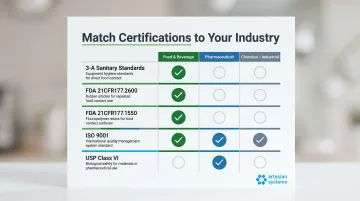
Request material compliance documentation (mill certs, FDA letters, test reports) from your supplier before purchase—verbal assurances are not sufficient for audit trails.
Core Insert Material Compatibility
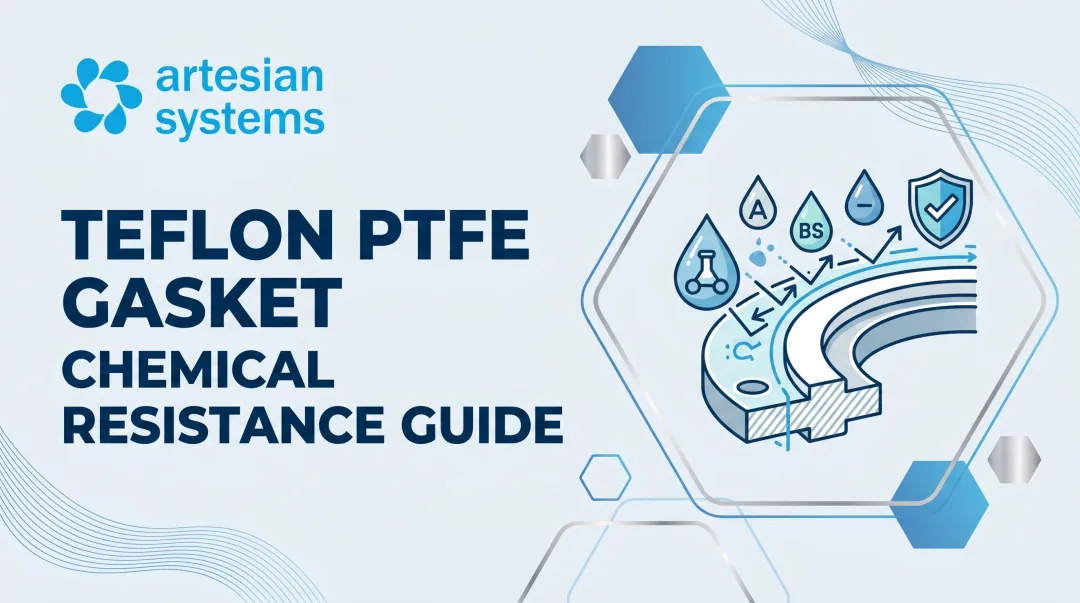
The PTFE shell provides chemical resistance, but the core insert must also survive the media and temperature conditions. Mismatched core materials are a leading cause of premature gasket failure.
Common core materials and their limitations:
- EPDM handles water, steam, and dilute acids well — avoid it with hydrocarbons, oils, or solvents
- Viton/FKM performs best with petroleum products and aggressive solvents at high temperatures, but breaks down with ketones and esters
- Silicone offers a broad temperature range and food-safe properties, but has lower mechanical strength than EPDM or Viton
If your application involves mixed media or solvent contact, verify core material compatibility against a chemical resistance chart—don't assume the PTFE shell alone protects the core.
Customization and Engineering Support
Material compatibility gets you halfway there. The other half is fit. For non-standard flanges, glass-lined equipment, or legacy installations, sourcing custom-sized or custom-configured gaskets from a manufacturer with engineering expertise is critical. Off-the-shelf gaskets may not seat properly, leading to leaks, flange damage, or gasket extrusion.
Look for manufacturers that offer:
- Custom CNC machining for non-standard OD/ID dimensions
- Engineering consultation to verify gasket thickness, compression, and bolt load requirements
- Material selection guidance based on process conditions (temperature, pressure, media, cleaning protocols)
- Prototype testing before committing to production runs
Conclusion
Choosing the right PTFE envelope gasket manufacturer means matching their certification portfolio, material options, and engineering support to your specific regulatory and process requirements. A gasket that works in a chemical plant may not meet pharmaceutical cleanroom standards, and a sanitary-grade gasket rated for food contact may fail in a high-temperature petroleum application.
Evaluate manufacturers on their consistent sealing performance across production cycles, ability to supply custom configurations, and responsiveness to technical inquiries—not just initial product quality. Request material certifications, ask for application-specific references, and verify that the manufacturer's quality system aligns with your industry's regulatory expectations.
If your application requires FDA 21CFR, USDA, or 3A compliant sanitary-grade components backed by hands-on engineering support, those criteria point toward a manufacturer with direct process experience—not just a catalog.
Artesian Systems manufactures tri-clamp PTFE and EPDM envelope gaskets for food, pharmaceutical, nutraceutical, and chemical applications, with ISO9001-approved processes and nearly two decades of field engineering experience. For glass-lined flanges, sanitary systems, or non-standard process conditions, reach out to discuss your sealing requirements at artesiansystems@gmail.com or (801) 318-4079.
Frequently Asked Questions
What is the difference between a PTFE envelope gasket and a solid PTFE gasket?
A solid PTFE gasket is made entirely of PTFE and is prone to creep and cold flow under bolt load, often requiring frequent retorquing. An envelope gasket uses a PTFE outer shell over a flexible core insert (rubber or fiber). This combines PTFE's chemical resistance with the core's compressibility and sealing memory, making envelope gaskets more practical for most flange applications.
What industries are PTFE envelope gaskets most commonly used in?
PTFE envelope gaskets are widely used in pharmaceutical, food and beverage, chemical processing, petroleum/petrochemical, and water treatment industries. They are especially preferred where chemical resistance, sanitary requirements, or glass-lined/enamel-coated flanges are involved.
What core insert materials are available in PTFE envelope gaskets?
Common options include EPDM, Viton/FKM, silicone, Buna-N, and aramid fiber. EPDM suits water and steam, Viton handles petroleum and solvents, silicone covers the widest temperature range, and aramid fiber provides high mechanical strength for demanding applications.
What temperature and pressure ranges can PTFE envelope gaskets handle?
PTFE is rated to approximately 260°C (500°F), but service limits depend on the core: EPDM handles -51°C to 149°C, Viton -15°C to 199°C, and silicone -59°C to 232°C. Pressure ratings range from 25 bar for flat insert designs to 40 bar or higher for corrugated metal core versions.
What certifications should I look for when buying PTFE envelope gaskets for food or pharma use?
For food use, verify FDA 21CFR177.2600/1550 compliance, 3A Sanitary Standards approval, and USDA listing. Pharmaceutical applications additionally require USP Class VI certification; ISO 9001 registration indicates a reliable quality management system. Request written material compliance certificates before purchasing.
Can PTFE envelope gaskets be custom-made for non-standard flange sizes?
Yes, reputable manufacturers offer custom sizing and configurations. Buyers with glass-lined, enamel-coated, or legacy non-standard flanges should work with a manufacturer that has engineering capability to verify fit, compression requirements, and performance under actual service conditions.